A workflow turns a recurring team process into an ordered, shared path. In code review, it makes each stage, handoff, responsibility, and expectation visible instead of leaving them to individual interpretation. section 3.3.1 section 9.2.1
A practical code review workflow answers these questions in sequence:
- Starting point — what event enters the process, usually new or changed code. section 3.3.1
- Review request — how the author requests review, such as opening a pull request, assigning reviewers, and notifying the team. section 2.2.1 section 3.3.1
- Review mechanism — which tool is used and what reviewers are expected to inspect. section 2.2.1 section 3.3.1
- Feedback cycle — how reviewers leave comments, how authors respond, and which comments must be addressed. section 3.3.1
- Signoff and ending point — which conditions permit approval, merging, promotion, or completion. section 3.3.1 section 3.5
A workflow should be explicit without becoming a bottleneck. Excessive approvals and gate checks can delay releases, frustrate teams, and make people disengage; refinement should respond to observed friction. section 7.1.4 section 9.3
From assumed process to agreed workflow
A team lead sketches the current code review process on a whiteboard. Team members correct the draft, consolidate duplicate complaints, identify weaknesses, and agree on solutions. After observing the revised process for several sprints, the team updates the workflow again and records it in its working agreement. section 9.2.1 section 9.3
Figure 2.2 A high-level workflow of the typical, modern code review
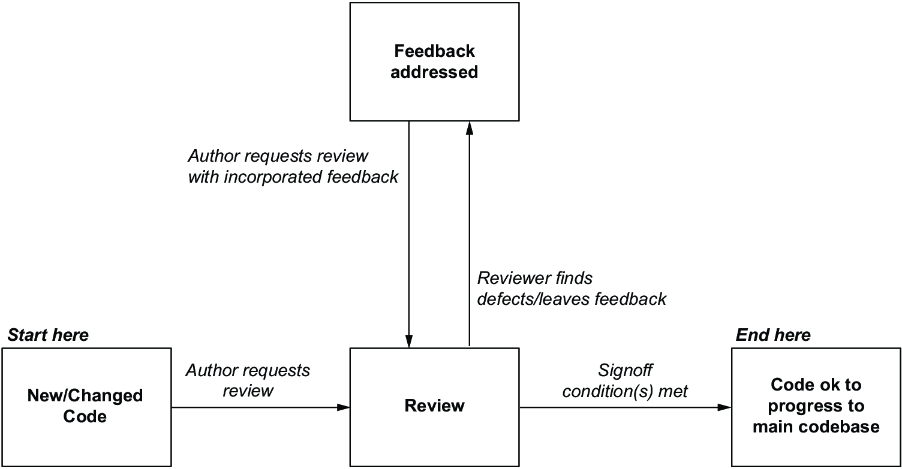
Use the high-level workflow diagram to see how changed code, reviewers, the review mechanism, and signoff condition fit together. section 2.2.1















































