A software container packages an application with its code, dependencies, configuration files, and runtime environment into an executable unit. A container image acts as a reusable blueprint, while the container is a running instance of that image. section 4.3.1
Containers support portable, efficient application delivery:
- Build an image on a local machine, then move the same image through development, testing, staging, and production environments. section 4.3.1
- Run multiple containers on one operating system, allowing applications to share the host OS and start quickly. section 4.3.1
- Store and retrieve images through a container registry before deploying them. section 4.3.1
- Use Kubernetes to automate container deployment, management, visibility, scaling, load balancing, networking, and desired configuration. section 4.3.3
Container security differs from server security because containers are lightweight, short-lived, and immutable. Updating or patching a running container is not supported; rebuild the image and redeploy it instead. Their dynamic behavior also requires monitoring that can observe pods and containers, rather than relying only on traditional server tools. section 4.4
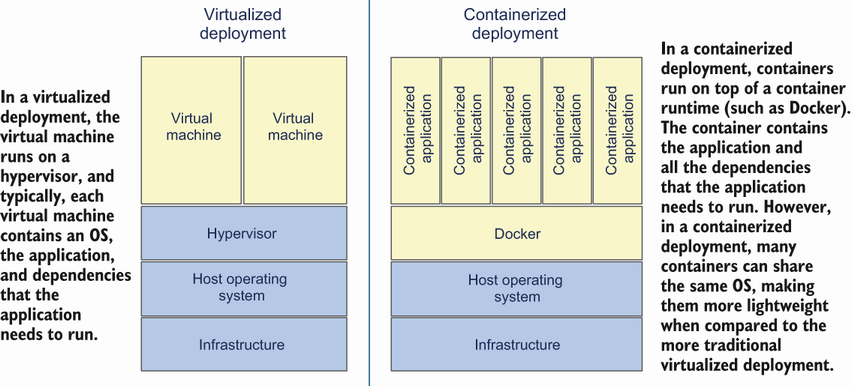
Visualize multiple containers running on a single operating system hosted by a virtual machine. section 4.3.1


























