Generative modeling uses learned patterns to produce new content. A model can generate text, images, video, or sound rather than only classify an input. Chatbots and image generators are familiar examples. section 20.1.1 section 1.8
A common route from training data to generated output is:
- Train on a reconstruction task, such as predicting the next word or restoring a sharp image from a noisy one. The target comes from the input itself, so manual labels are not required. section 1.8
- Learn the statistical structure of the training content. The resulting representations can support sampling new outputs with characteristics similar to what the model has seen. section 16.0 section 20.1.1
- Steer a foundation model with a prompt instead of programming a separate solution for every request. section 1.8
From prompt to image
Midjourney generated an image from a prompt requesting a hand-drawn science-fiction landscape with residents in a building shaped like a red letter K. The prompt specifies the desired content; the generated image is a new output. section 16.0
Figure 16.1 An image generated with the generative image software Midjourney. The prompt was “A hand-drawn, sci-fi landscape of residents living in a building shaped like a red letter K.”
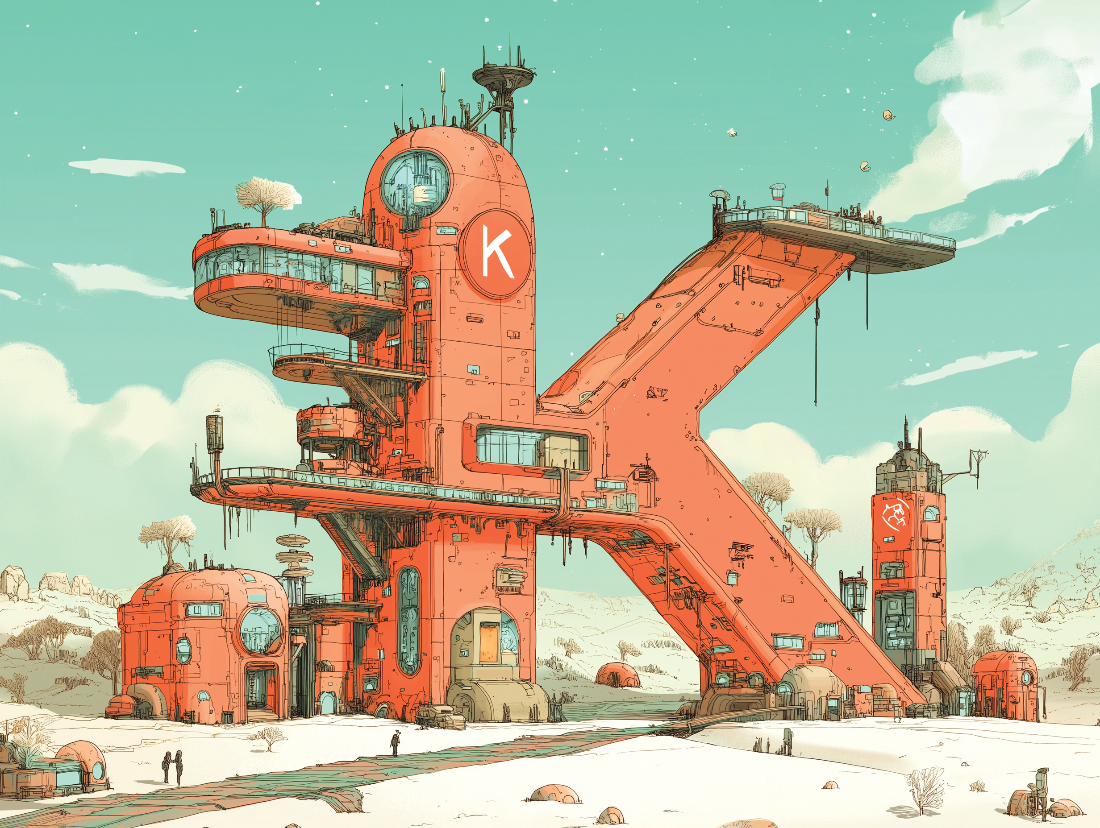
Compare the generated image with its prompt to see how a content request can steer image generation. section 16.0
Generation can augment creative work without replacing the artist’s judgment. Sampling learned patterns is a mathematical operation; people give the result meaning and can steer it toward a purpose. Likewise, impressive applications do not establish claims of imminent human-level intelligence or sweeping short-term economic change. section 16.0 section 1.10




























