Ask a chatbot to draft a poem, or give an image tool a short description of a scene, and it can produce something new. Generative modeling is the use of AI models to create content rather than merely sort or label it. The content may be text, images, audio, video, or code. Large language models (LLMs) are a prominent example: they generate language for conversations, summaries, and other writing tasks. section 1.0 section 1.15 section 10.18
Generating a convincing response is not the same as establishing that it is true. An LLM can produce fluent text that contains mistakes or invented details. It may also repeat passages encountered during training, creating a risk of exposing private information. These possibilities matter most when a response is used as evidence, professional advice, or a substitute for human judgment. section 5.8 section 10.18
Generative models enter everyday work in different ways:
- Writers, marketers, and designers use them to explore ideas, adjust messaging, and create visuals from text prompts. section 4.6 section 4.7
- Filmmakers use them for storyboards, scenes, effects, and editing; musicians experiment with generated responses during performance. section 4.8 section 4.9
- Students and workers use them for learning, writing, coding, and repetitive tasks, while institutions decide when disclosure and human oversight are needed. section 6.12 section 6.8
When plausible writing fails
A lawyer used ChatGPT to help prepare a court brief and submitted citations to cases that did not exist. The result illustrates a practical rule: check generated claims against reliable sources, especially when an error could harm someone. Polished wording is no guarantee of sound evidence. section 5.8
Figure 4.5 AI-generated interpretations of ketchup: a Van Gogh–style painting of a swirling ketchup landscape, a crayon drawing of a ketchup bottle by a toddler, and a surrealist painting of a ketchup bottle melting over a clock
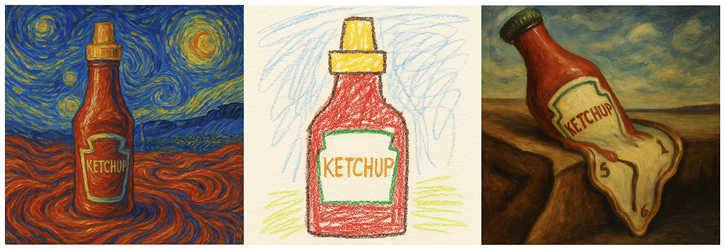
Compare the generated ketchup images across artistic styles. Their resemblance to familiar branding shows both the flexibility of image generation and how existing visual patterns can carry into new outputs. section 4.6
The questions extend beyond output quality. Synthetic media can fool viewers or recreate a person without consent. Creative uses raise disputes about copyrighted inputs, authorship, and performers’ rights. Productivity gains in particular tasks do not settle what will happen to jobs, wages, or access to opportunity. Responsible use therefore involves checking outputs, protecting data, setting clear rules, and remaining open about uncertain long-term effects. section 4.0 section 4.8 section 6.12 section 10.34




























