Generative artificial intelligence can produce articles and other content from learned language patterns, but its most useful role here is as a fast, fallible assistant for technical writing. Use it to expose gaps or grammatical problems—not to replace firsthand experience, judgment, or distinctive expertise. section 3.1 section 4.6.2
Use generative AI in focused passes:
- Check a draft for logical gaps, missing detail, or likely reader questions with prompts such as “Does this engineering blog post have any logical gaps?” section 4.6.2
- Ask for explanations of specific grammar rules or errors in a sentence or complete article. section 5.3.3
- Treat every recommendation as a candidate finding: verify it, reject trivial or unsuitable advice, and expect both omissions and nonsense. section 4.6.2 section 5.3.3
A quick gap check
After drafting an engineering post, paste it into an AI chatbot and ask: “What are some problems with this engineering blog post?” A useful concern may appear within seconds, but inspect every suggestion before revising. section 4.6.2
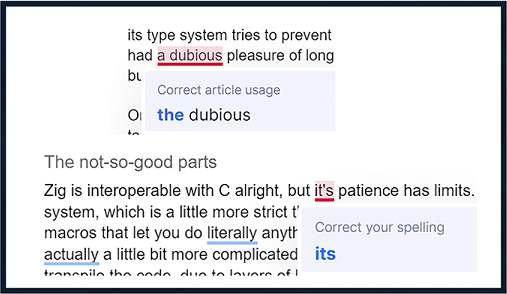
Figure 5.2 In the fake Zig blog post, Grammarly instantly caught two things we would correct: incorrect article usage and a simple mixup between it’s and its.
Use the automated grammar-checking example as a reminder that machine findings can be useful without being authoritative. section 5.3.3




























