A probability distribution assigns probabilities to possible outcomes. In language generation, logits are converted into probabilities for possible next tokens; the model selects one and repeats. Selecting the most probable token is one option, while sampling allows more varied responses. section 10.2
In simulation, distributions describe uncertainty in outcomes such as customer stay durations or weather-related foot traffic. Simulated state transitions can also be counted and normalized to estimate the distribution of the next state. section 1.6.2 section 2.2
Customer-state transitions
Starting from “Buy Pro,” simulate a Markov chain, count the next states, and normalize their frequencies. Compare the resulting distribution with estimates that also condition on earlier states. section 2.2
Figure 10.1 Overview of large language models architecture.
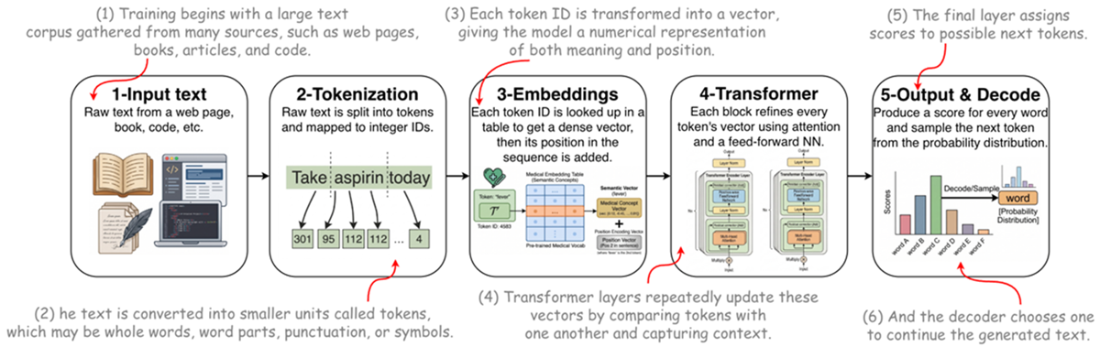
The architecture overview situates probability conversion and token selection at the model’s output stage. section 10.2