liveBook · Manning

Language model

As explained in Building Reliable AI Systems

A model that represents patterns in language to predict or generate sequences of text.

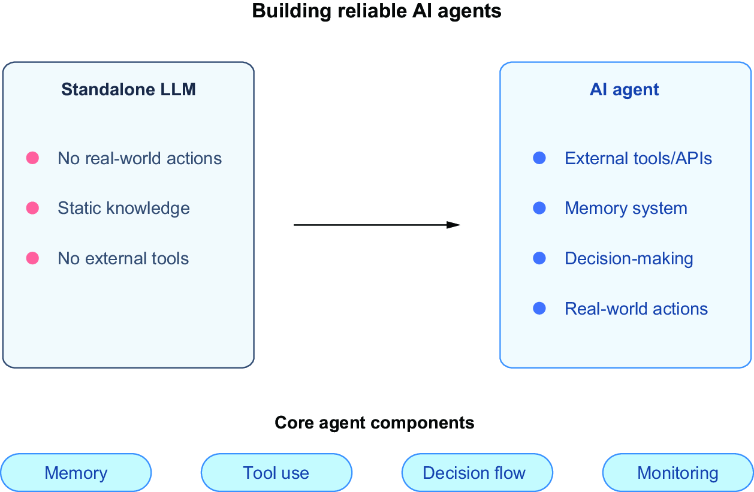
A language model represents patterns in language to understand prompts and generate text, but a standalone model cannot connect to live systems or perform real-world actions. Asked to find a flight, it may suggest airlines without checking schedules or booking. section 6.0

Figure 6.1 Core differences between a standalone LLM and AI agent
figure

Compare the language capabilities of a standalone model with the tools and actions an agent adds. section 6.0

Agents make language models actionable by adding tools and workflow control. In multi-agent systems, specialized agents can divide image understanding, product search, and policy lookup; a single model handling all three may become inconsistent as irrelevant context accumulates. section 6.0 section 8.0


How Building Reliable AI Systems covers it

How deep it goes
Defines its practical role and production limits, but does not explain model internals or training.
Examples
Uses flight search and booking, plus a customer request combining image understanding, product search, and return-policy lookup.
What you can do after
Evaluate standalone language models by distinguishing text understanding and generation from external action.
How it connects
Connects language models to AI agents, external tools, APIs, databases, and multi-agent systems.

Also explained in

Compare how 67 books explain language model →

Related concepts

This explainer was generated by Manning's knowledge graph from the text of Building Reliable AI Systems. The section links point to the parts of the book it draws on.
































































