A machine-learning model learns patterns from training data and uses them to predict values for new, unseen inputs. In live inference, it generates a prediction from a fresh event. section 12.4.1 section 12.4
Training can happen ahead of deployment: a model server hosts the trained model, while an application extracts event data, requests a prediction, and receives the result. Kafka can carry events into this flow and prediction results onward. section 12.4.1 section 12.4
A typical prediction flow separates model preparation from serving:
- Prepare data, define features and a target, then split the data for training and testing. section 12.4.1
- Train and evaluate the model, then deploy it to respond to new event data. section 12.4.1
Live prediction
An event can provide input for a fraud-detection prediction; the need for timely decisions makes streaming inference useful. section 12.4
Figure 12.6 The ML model is deployed in advance and is used by the Kafka Streams application for predictions.
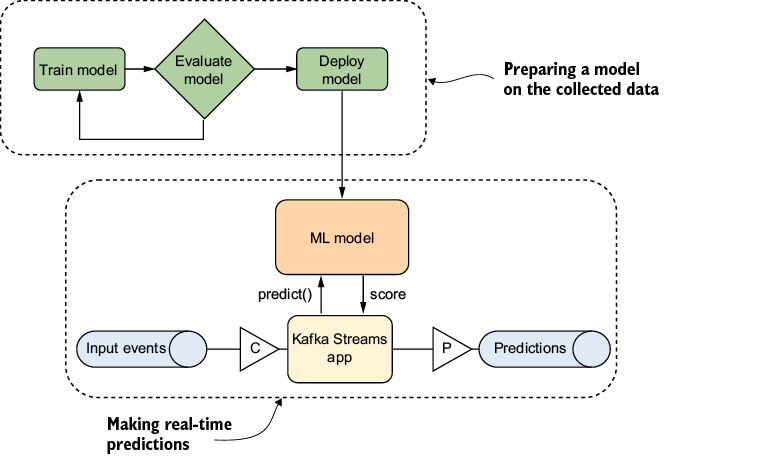
Shows a previously deployed model being used by a Kafka Streams application to make predictions. section 12.4.1


































































