A large language model (LLM) takes a natural-language prompt and returns a response. Trained on massive datasets, it uses learned statistical weights to predict plausible continuations rather than reasoning like a human. Its value depends on how clearly people frame tasks and evaluate results. section 1.3 section 2.1
LLMs support testing through three related capabilities:
- Generate test cases, automation code, synthetic data, or other suggested material for a specific task. section 1.1.1 section 3.3.1
- Transform information between structures, such as test data into SQL, code between languages, or exploratory notes into summaries. section 3.3.2
- Enhance existing material by reviewing code, adding comments, expanding risk analysis, or suggesting test ideas. section 3.3.3 section 1.1.3
From a vague request to useful test ideas
The prompt “Create tests for a file upload feature” can produce generic checks for valid formats and file-size limits, but it may miss product context. Supplying acceptance criteria—PDF, DOCX, and TXT support; a 20MB limit; progress updates; private initial access; and audit records—gives the LLM a stronger basis for suggestions. A tester must still judge coverage, risks, and correctness. section 3.3.1 section 1.2.2
Figure 1.2 An outline of how tools enhance and extend the reach of testing
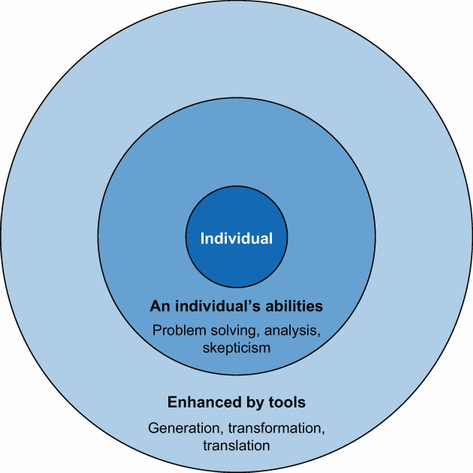
Use the area-of-effect model to relate human testing judgment to tools that extend testing reach without replacing its direction. section 1.2.2
LLMs are probabilistic and can hallucinate confidently, so generated code, tests, translations, and recommendations require verification. Prompt engineering improves the chance of useful output by adding context, specifying the task, breaking down complex work, and asking for suitable formats; it does not make results foolproof. section 1.2.3 section 2.4.6 section 2.7


































































