A language model used for dialogue can make monitoring harder than a system expected to return one fixed answer. Repeated prompts to ChatGPT produced different but similar replies; earlier observations also found answers that contradicted one another. The practical question is not whether every reply matches, but which replies are acceptable. section 14.1.2
Treat model changes and output checks as separate operational decisions:
- When a model is retrained or updated, the same input may produce a different output. Check whether the change was needed and whether its effects are acceptable. section 14.1.2
- Do not assume that collecting more training examples is enough. New samples help when they add information relevant to the problem; near-duplicates and extreme noise may not. section 6.4
- Choose serving effort to fit the workload. A time-sensitive request and a scheduled batch job have different latency and cost constraints. section 15.0
Figure 14.2 Annoying ChatGPT to ensure it is a fairly nondeterministic model. Although responses are similar, they are not identical.
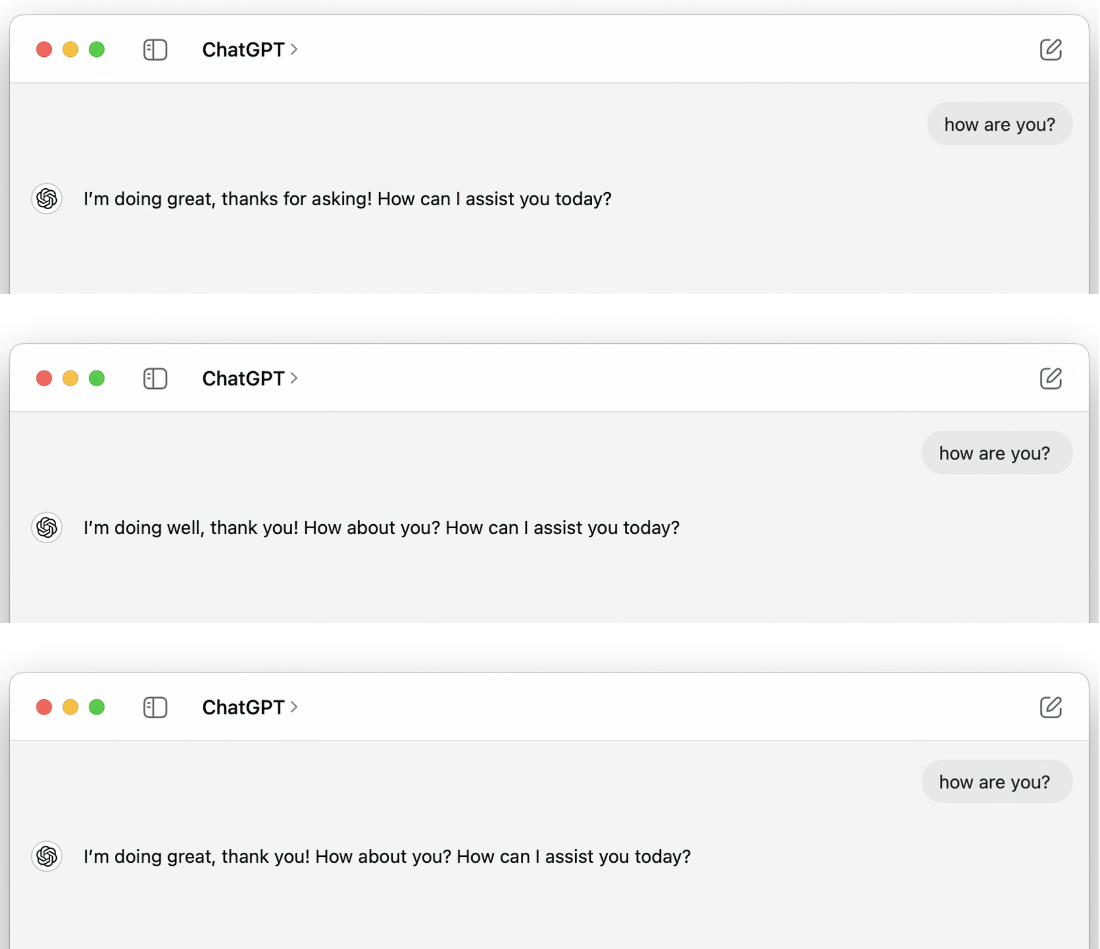
Four replies to the same ChatGPT prompt illustrate why identical-output checks are a poor fit for this dialogue example. section 14.1.2


































































