A language model is a neural model trained on extensive text data to predict and generate language. In cybersecurity work, a large language model (LLM) can turn instructions into synthetic incident data, analyze patterns, and draft reports or response recommendations. Its output is a starting point for analysis, not a verified security finding. section 13.11 section 13.6
Choose and use a model according to the task:
- Set a specific prompt with context and a requested format; refine it when the output does not meet the need. section 13.11
- Weigh privacy, task complexity, cost, and customization. Local models keep sensitive data on-premises; cloud services use third-party infrastructure. section 13.3
- Check generated results for accuracy, data-quality problems, and bias before using them to guide decisions. section 13.11
From incident records to response priorities
A security team can ask an LLM to classify incidents, look for recurring patterns, and propose actions. In one example, a chart makes failed logins the most frequent incident type, while an incident table pairs severity and timestamps with generated recommendations. The team can investigate the pattern and verify the recommendations before acting. section 13.8.1
Figure 13.1 AI synthetically generated pipeline
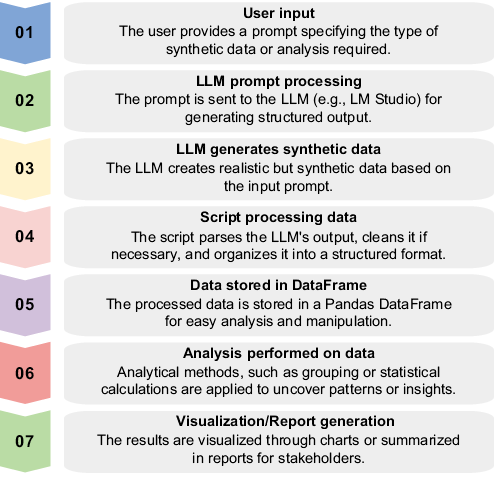
The pipeline shows where the model fits: a structured prompt produces fictitious data, which is organized in a Pandas DataFrame, analyzed with Python, and presented as charts or reports. section 13.6


































































